 Bar & Beat
Pulse
A rest is a measured space
A rest can look like a request to stop. In notation it is more specific: a duration without a note sounding in that part. The musical time continues through the space. When a player waits vaguely and then guesses the next entry, the rest loses its length and the surrounding rhythm changes. Begin by treating the silent span as something that can be counted and shaped. It does not need to be filled with an audible substitute, but it does need a place in the pulse. The next sound should arrive because its time has come, not because the silence has begun to feel long.
Give the silence a clear boundary
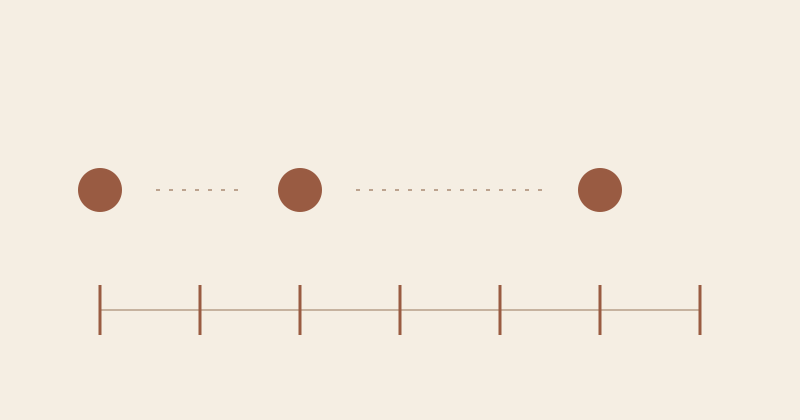
Take a short four-beat pattern with a sound on beat one, a rest on beat two, and sounds on beats three and four. Tap the pulse quietly while speaking only the sounding beats. Notice whether beat three is pulled forward into the empty space. The tap supplies a reference without changing the written rest into a new note. Once the pattern is clear, make the tap smaller or internal. Keep the exercise at a pace where the silent beat can remain deliberate. Speed is not evidence that the duration has been understood if the gap keeps changing.
The end of the preceding sound matters too. A note before a rest may need to stop at a particular point so the rest is actually present. Depending on the instrument and notation, the physical action can differ. For this desk exercise, speak a short syllable and then leave the specified space. Avoid allowing the vowel to drift through the rest merely because you are still counting internally. Distinguish holding a note from leaving silence. Both can occupy the same number of beats, but they produce different musical results. The notation asks you to notice that difference rather than only the next attack.
More than one silent beat
Longer rests invite a different kind of error: losing the place within the bar or across several bars. Use an appropriate counting method for the passage. In a simple exercise, speaking the bar count softly can help preserve the sequence. In an ensemble, listening to the other parts can supply additional reference, but that requires knowing which events correspond to your return. Do not rely solely on a remembered tune fragment if it leaves the number of bars uncertain. Mark a clear rehearsal cue in a working copy where appropriate and keep the original notation visible.
A rest at the start of a phrase deserves a count-in that includes it. If the part begins after one beat of silence, starting the count only at the first note removes the written relationship. Count the lead-in, pass through the rest, and enter at the indicated point. This is often easier when the exercise is spoken before it is played. The hands can then focus on the entrance rather than being asked to discover the rhythm at the same time. Use a short span; a successful isolated entry is more informative than a long run that begins with a guess.
A practical practice note can name the exact problem: “second beat rest becomes short” or “return after two bars is uncertain.” That is more actionable than “rests are bad.” Work on the relevant span with a steady reference and reset when the count is lost. There is no advantage in pretending the sequence remained intact. A clean restart lets you hear the duration again. If a metronome is used, choose a comfortable setting and remember that its clicks are references, not permission to ignore the written grouping and articulation around the rest.
The silent part becomes easier when it is treated as ordinary musical material. It has a duration, a location, and a relationship to the sounds before and after it. Practice can make those boundaries clear without making the performance stiff. The goal is a silence that belongs to the phrase. Once it has that place, the following note can arrive naturally and accurately, with no need to rush into the gap or wait for a cue that the score never promised.
Keep reading